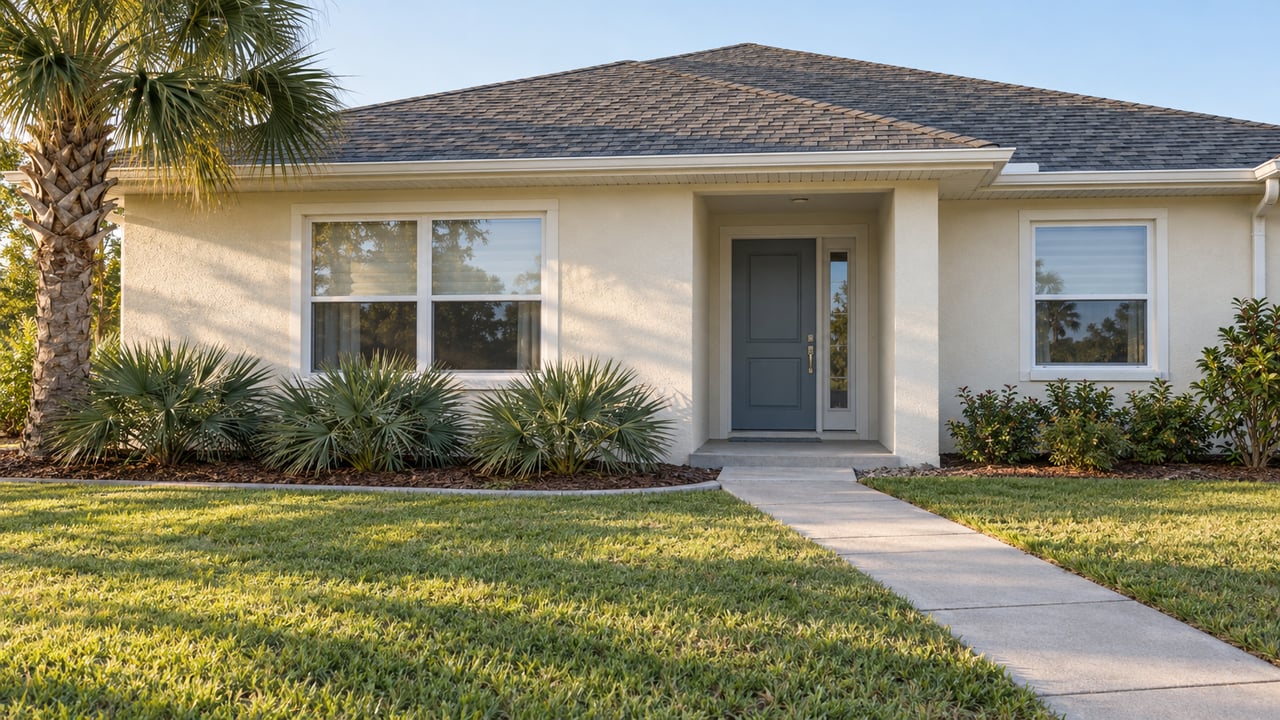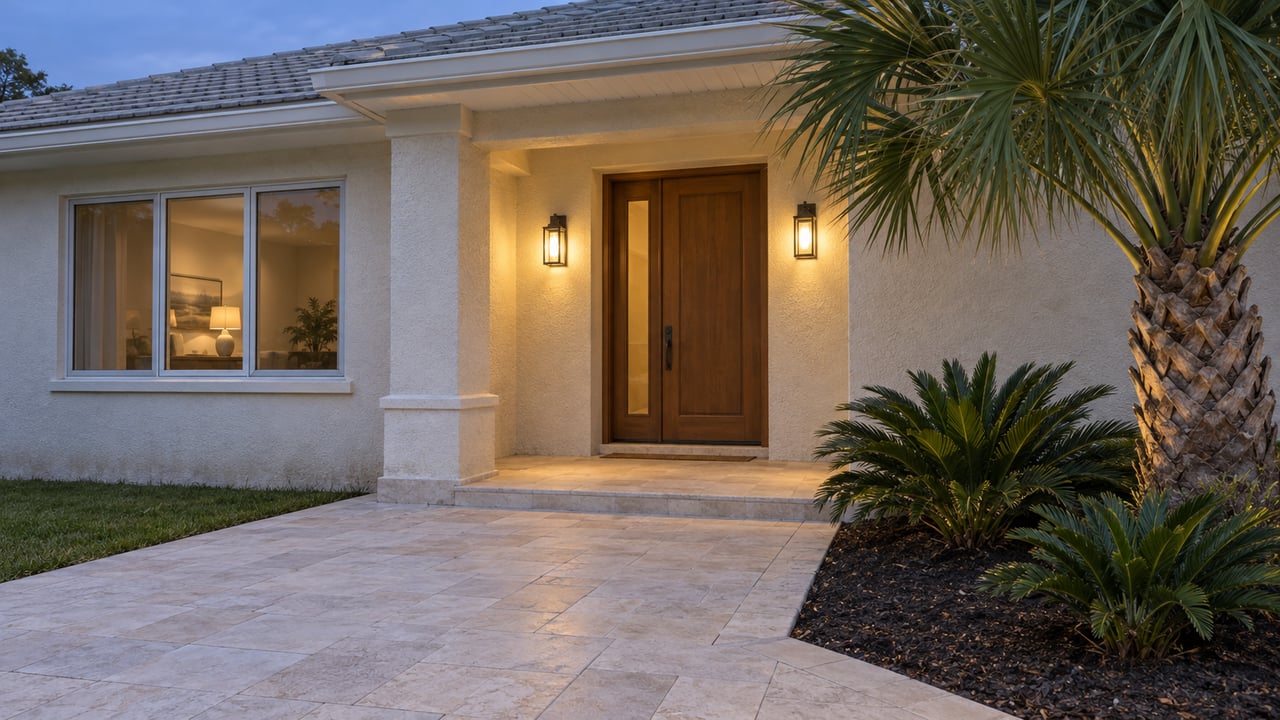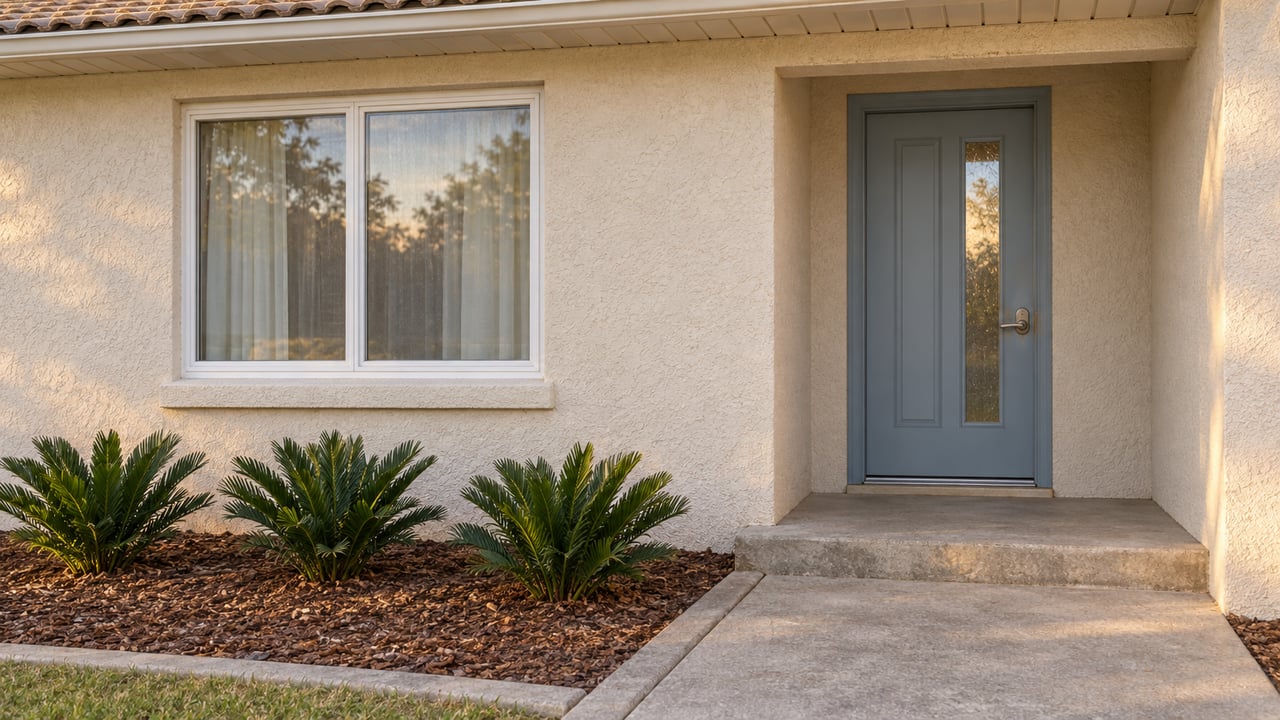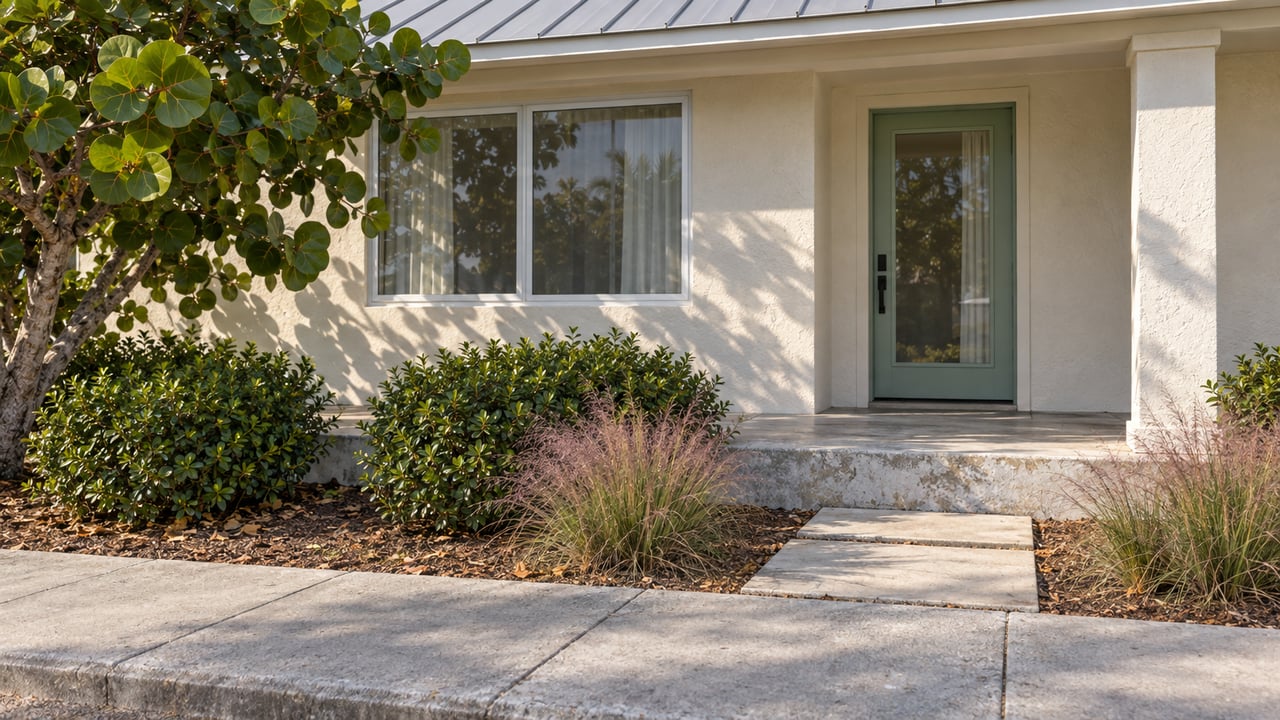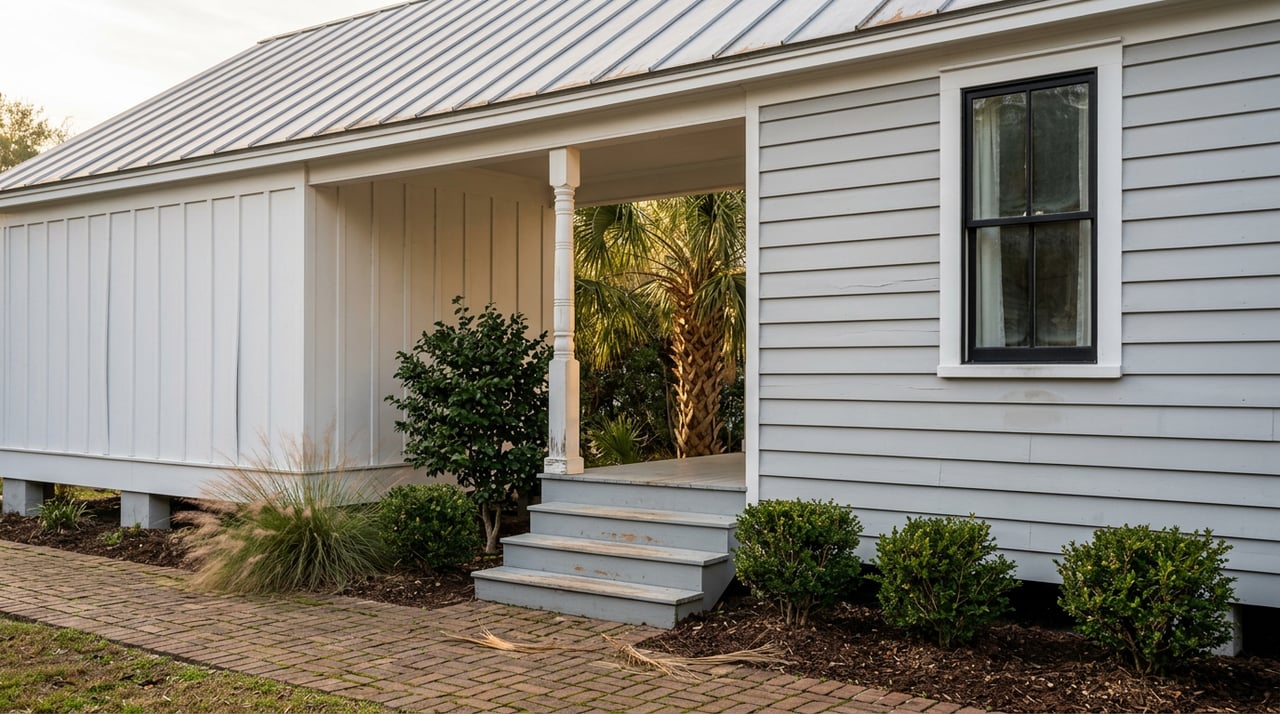
Two three-bedroom cottages sit a few blocks apart in St. Augustine. Same era, similar square footage, comparable finishes. One sells with short-term rental income already built into the offer, because the city will let a new owner take nightly guests. The other, despite looking nearly identical from the street, cannot legally be rented for anything shorter than a week. The difference comes down to each parcel's zoning classification.
That is the real story behind St. Augustine home prices in 2026. The county-wide median gets quoted constantly, and it is accurate as far as it goes. But it does not capture all the differences among Lincolnville, Vilano Beach, and Davis Shores. A parcel's rental rules can affect its investment value, while geography and the applicable jurisdiction also matter.
The Median Everyone Quotes, and What It Actually Covers
As of early August 2026, local MLS data puts the St. Augustine median list price at $569,000 across 263 active listings, with a trailing 12-month median sold price of $539,000 and an average of $390 per square foot. That number is real. It is also a blend of markets that do not behave alike.
Pull the same window by neighborhood and the range widens fast:
| Area | Recent 2026 figure | What it reflects |
|---|---|---|
| St. Augustine, county-wide | $539,000 sold median / $569,000 list median (as of Aug 6) | Every submarket averaged into one number |
| Lincolnville | Median around $645,000 (June); listings from $314,999 to $1,549,000 | Wide spread inside one historic district |
| Vilano Beach | Median around $900,000 (July); active listings $420,000 to $4.25 million | Oceanfront to teardown in the same market |
Buyers who anchor on one county-wide figure end up either overpaying to be "close to St. Augustine" or underpaying attention to the specific parcel they are about to close on.
Even inside a single neighborhood, the number can be noisy for reasons that have nothing to do with values rising or falling. In one recent month, Redfin's own tally for Lincolnville showed the average sale price down 32.7 percent year over year. That was not a neighborhood losing a third of its value. It was a small sample of closings that happened to skew lower that month. Thin transaction volume makes any single neighborhood median a shaky thing to build a decision around, which is exactly why the zoning question underneath it matters more.
How Rental Rules Can Affect Property Value
An important consideration for investor-minded buyers is how these rules apply to a specific parcel. St. Augustine's short-term rental rules are not organized by neighborhood. They are organized by zoning classification, and that classification can change from one side of a street to the other.
The city sorts every residential parcel into one of three buckets:
- RS-1 and RS-2 zoning allows rentals for one week or longer only. Nightly stays are not permitted, regardless of how a listing gets marketed.
- HP-1 zoning allows rentals for one month or longer.
- Every other residential zoning class allows nightly rentals, once registered.
Registration is not a formality. The city's current fee schedule under Resolution 2025-41 charges a base rate of $303.03 plus $79.30 per rental bedroom, and every unit needs an annual life-safety inspection from the fire department before it can legally host a nightly guest.
The practical effect: two houses on the same street, built in the same decade, can carry very different ceilings on what they are worth to an investor, purely because of a zoning line drawn long before either owner bought in.
Why Lincolnville Is Really Two Markets Wearing One Name
The National Park Service lists the Lincolnville Historic District on the National Register, but that does not mean the whole neighborhood follows one preservation-related set of rental rules. The rental minimum on any given parcel depends on its underlying residential zoning, not its historic pedigree.
That is why comparing two Lincolnville listings side by side takes more than square footage and a walk-through. A cottage two blocks off West King Street may sit in a zoning class that permits nightly stays. A near-identical cottage on a quieter side street may not. The neighborhood name tells a buyer almost nothing about which one applies.
Why Davis Shores Splits North and South
In Davis Shores, geography also matters. On the north side, homes are closer to the Bridge of Lions and the bayfront; the south side is a short drive further from that access point.
Vilano Beach Follows County Rules, Not City Zoning Tiers
The zoning-tier system above only applies inside St. Augustine city limits. Vilano Beach sits in unincorporated St. Johns County, which means it answers to an entirely separate short-term rental ordinance, not the RS-1, RS-2, or HP-1 framework that governs Lincolnville and Davis Shores. The county's rules, laid out in Ordinance 2021-23, require their own registration and annual renewal for any short-term rental in the unincorporated areas.
That distinction matters when comparing a Vilano Beach listing to a Lincolnville listing side by side. The rental math is not different only because of price per square foot. It is governed by a different office, on a different renewal cycle, under a different set of rules entirely.
What This Means If You Are Comparing Neighborhoods
A neighborhood name tells a buyer almost nothing about what a specific home is allowed to do. Before treating rental income as part of the value equation on any St. Augustine property, it is worth confirming:
- Whether the parcel sits inside city limits or in unincorporated St. Johns County
- Which zoning classification the parcel actually carries, not the neighborhood's general reputation
- Whether that classification allows nightly, weekly-minimum, or monthly-minimum stays
- What the current registration and inspection costs run, since fee schedules get revised by resolution and are not fixed indefinitely
These details may not appear on a portal listing page. They can be checked through a parcel lookup and a call to the relevant department before an offer is made.
FAQ
Does a home's advertised neighborhood match its actual zoning classification? Not necessarily. Confirm the parcel's zoning classification rather than relying on its advertised neighborhood.
Does zoning still matter if I only want to live in the home myself? It can still affect resale value and marketability even for an owner-occupant, because the next buyer's investment math depends on the same zoning line, and that math shows up in how comparable sales get priced.
If you are weighing St. Augustine neighborhoods and trying to figure out what a listing's price actually reflects once the zoning is factored in, that is exactly the kind of ground-level detail worth sorting out before an offer goes in. Ramona Damian works with buyers and investors across St. Augustine, Vilano Beach, and Flagler County who want the zoning and rental picture explained plainly, parcel by parcel, before they commit. Let's Connect.
This article is general information, not legal, tax or financial advice. Consult a qualified professional about your situation.