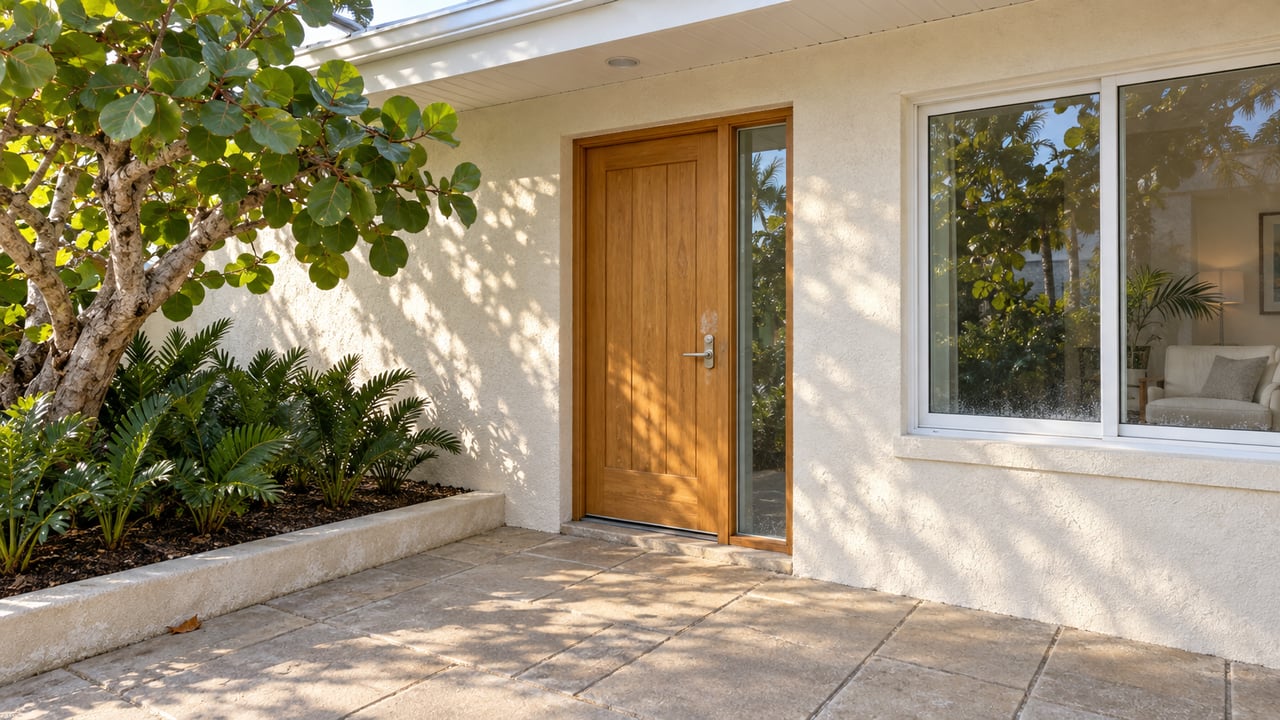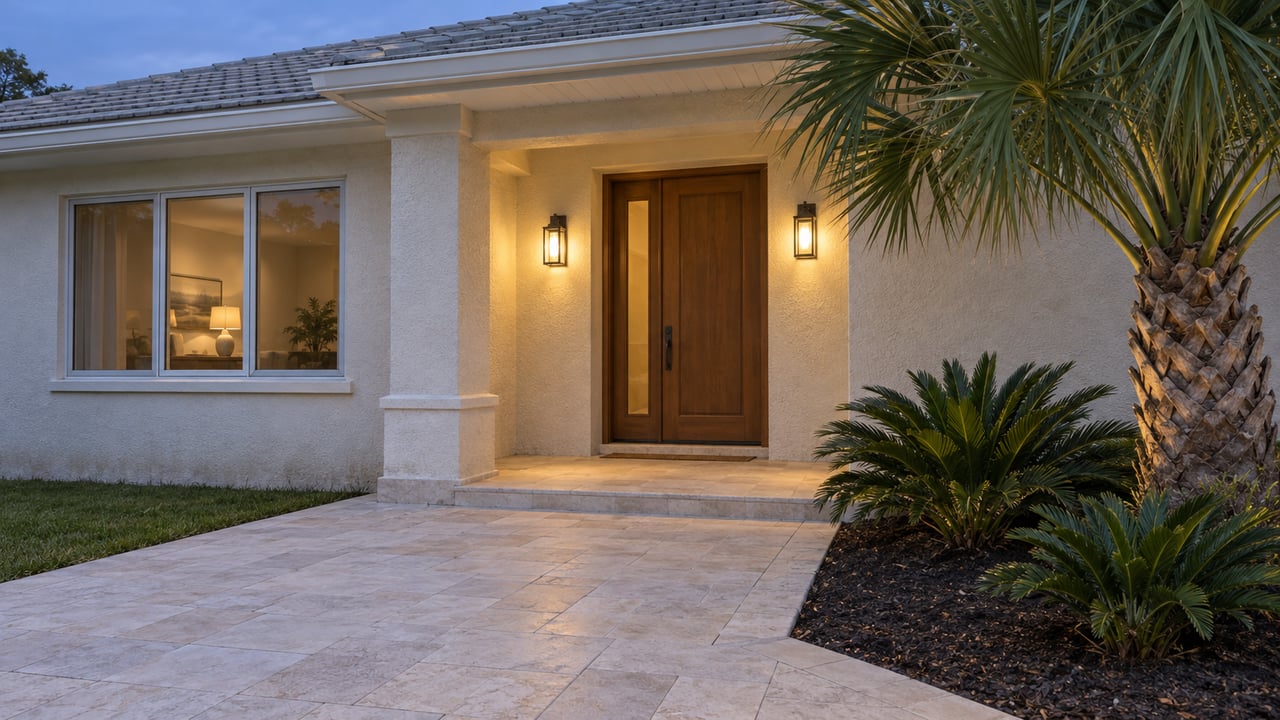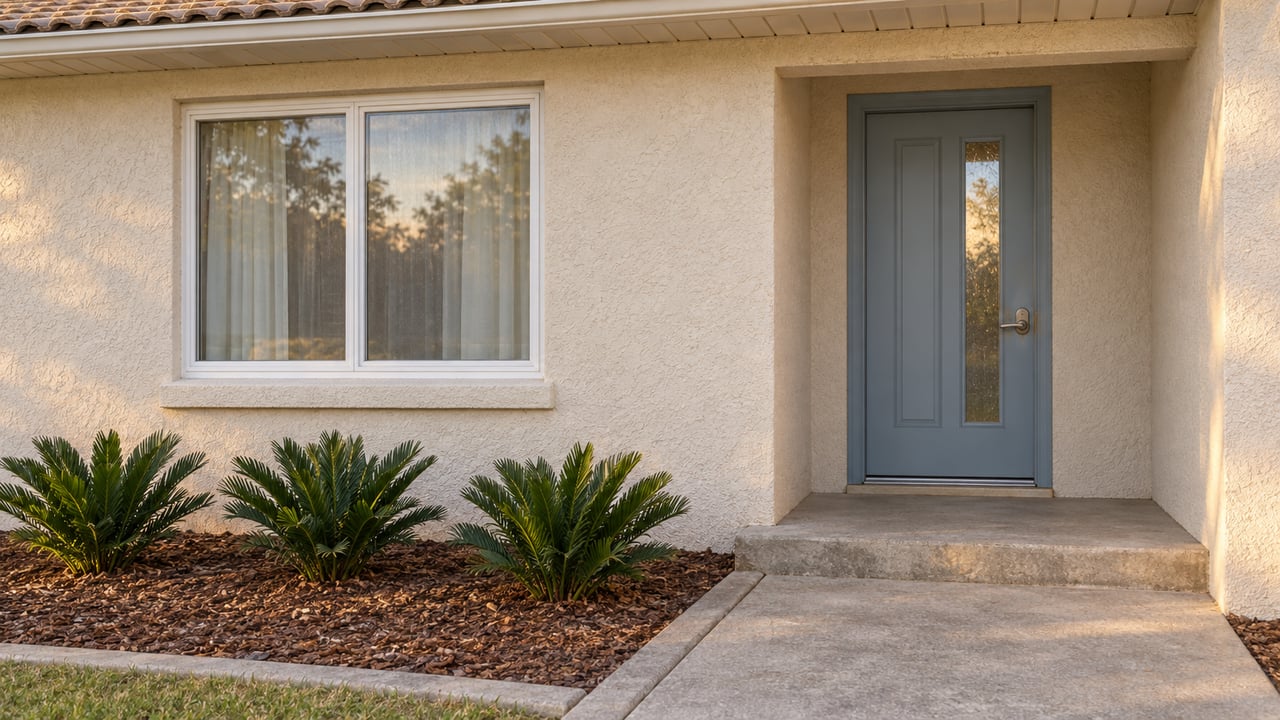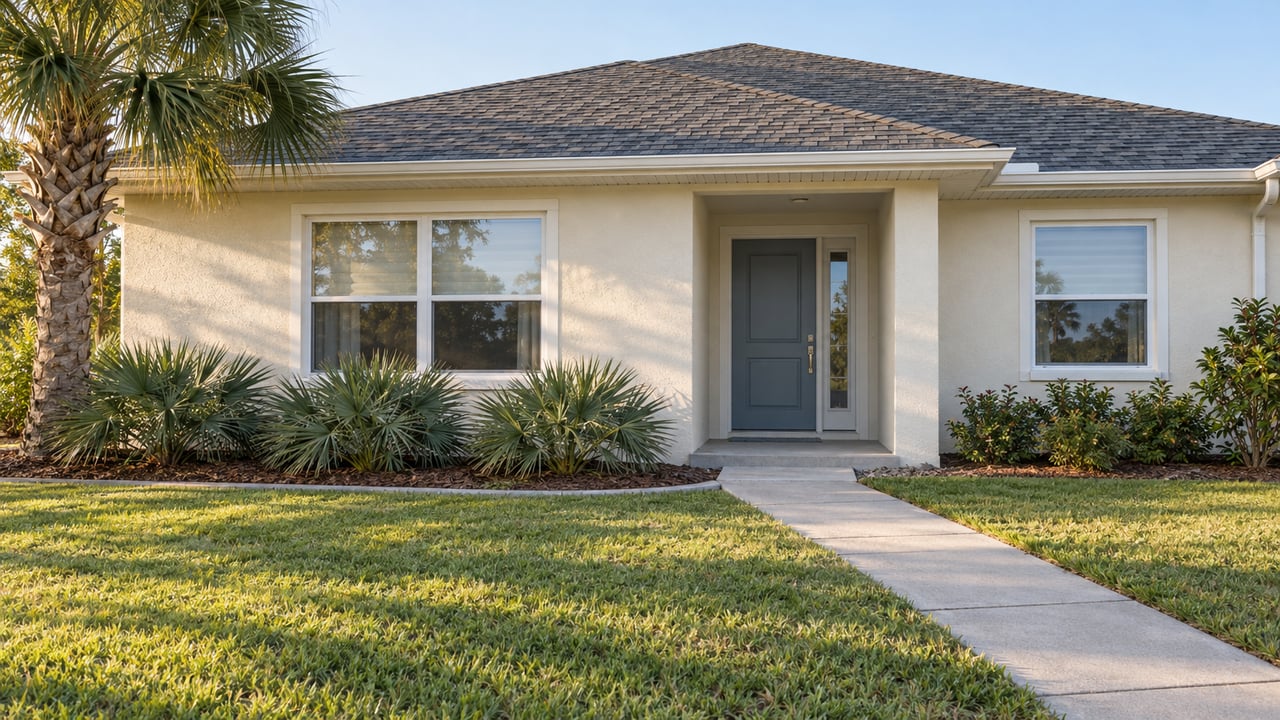
Picture two matching stucco homes side by side on a Palm Coast street. They have the same assessed value, the same lot and the same city services. In 2027 one owner could get a $150,000 homestead exemption on non-school property taxes while the other gets about a third of that. The only difference between them is that one owner was a Florida resident on December 31, 2026, and the other arrived a few months later.
That gap exists only if voters approve Amendment 3 on November 3, and it needs at least 60% of the vote. Most coverage centers on the larger exemption. For anyone moving to Palm Coast from Ohio, New Jersey or anywhere else outside Florida, though, the sentence that matters most is a short one near the middle of the official ballot summary.
The sentence in the ballot summary
The Florida Department of State's amendment booklet gives Amendment 3's title as "Increased Homestead Exemption; Lower Cap on Increases in Non-Homestead Property Assessments." Under it, the homestead exemption for all non-school taxes would rise to $150,000 in 2027 and $250,000 in 2028, then adjust for inflation after that.
The same summary says that "Persons who are not Florida residents on December 31, 2026, will receive the existing homestead exemption upon qualifying for a homestead exemption, with the increased homestead exemption beginning with the fifth year of exemption, to the extent permitted by the U.S. Constitution."
Florida Realtors' October 2 webinar recap puts the existing exemption at about $51,411 today. It says people who move to Florida after the cutoff "would receive the current exemption for their first four years and the enhanced exemption starting in year five." The House final bill analysis, dated June 16, 2026, describes it the same way. Owners who were not permanent Florida residents by the cutoff get the basic exemption and receive the larger one "after five years."
The trigger is Florida residency on one specific date. When you buy the house doesn't decide it. The webinar recap says anyone whose primary residence is in Florida on December 31, 2026 qualifies for the full benefit, including renters who buy a home later. Tax attorney French Brown, who presented the webinar, recommended that renters keep proof of residency such as a driver's license, voter registration or utility bills. The Florida Policy Institute's July 21 analysis called the wording less clear for people who don't own property yet, so that reading isn't settled.
How the two neighbors' exemptions compare
Take a newcomer who becomes a Florida resident in early 2027 and claims a homestead exemption for the first time that year. Counting 2027 as year one, the larger exemption arrives in 2031.
| Tax year | Owner who was a Florida resident on Dec. 31, 2026 | Owner who arrived in 2027 |
|---|---|---|
| 2027 | $150,000 non-school exemption | Existing exemption, about $51,411 |
| 2028 | $250,000 | Existing exemption |
| 2029 to 2030 | $250,000, adjusted for inflation | Existing exemption |
| 2031 | Enhanced exemption | Enhanced exemption, year five |
The first four years are where the difference adds up. On September 23 the Palm Coast City Council unanimously adopted a fiscal year 2027 millage rate of 4.1387 mills, the city's rolled-back rate, according to the Palm Coast Observer. At that rate, each extra $100,000 of exempt value is worth about $414 a year on the city portion of the bill. In 2027 the gap between the two neighbors is roughly $100,000 of exempt value, or about $410 in city taxes. In 2028 it is roughly $200,000, or about $820, and it continues through 2030. That math covers only the city line. Flagler County's levy and other non-school levies sit on top of it, so the full difference on a real bill would be larger.
The gap applies to ordinary Palm Coast homes. FlaglerLive, citing the Flagler County Association of Realtors, reported the August 2026 single-family median sale price at $390,000. The exemption comes off assessed value, which can differ from the sale price. Even so, a home near the local median could plausibly be assessed above $250,000, which means the newcomer would miss the full difference in exempt value. Homes in the city's mid-market are where the gap would be widest.
The revenue the city expects to lose
The second half of this sits in the city budget. In an October 1 release, Palm Coast cited Florida League of Cities estimates that the amendment could reduce city property tax revenue by about $12.4 million in 2027 and $21.7 million in 2028. Ad valorem taxes fund about $45.5 million of the General Fund, and the city budgeted roughly $15.2 million for fire services and $11 million for law enforcement in FY2026.
The city says no decisions have been made about cuts. It also says "there is no single revenue source currently available to the City that would fully replace a loss of this magnitude." It describes possible responses as "a combination of budget adjustments, spending reductions, fees, and other legally authorized revenue options." The city says it takes no position for or against the measure.
Fees are the part that ties back to the newcomer. An exemption lowers taxable value, but it doesn't lower a fee. A fee added to cover lost property tax revenue would cost the 2027 arrival the same as the owner next door, and for four years the arrival would also have the smaller exemption. The newcomer would pay the full cost of whatever replaces the lost revenue while getting the smaller share of the tax cut.
The county numbers are larger, and they have moved over time. FlaglerLive reported that Property Appraiser Jay Gardner told the Flagler Beach City Commission that Flagler County government could lose $33 million in 2027 and $59 million in 2028, against a general fund of about $140 million. In June, Gardner gave a rougher range of about $35 million the first year and more than $60 million the second. In that September presentation, he said local governments might need higher tax rates or user fees, and that non-core services could be cut.
Palm Coast's Amendment 3 page adds one more detail. The city's estimates cover only the larger homestead exemption, and the city "does not currently have a separate estimate for the financial impact of reducing the non-homestead assessment-growth cap to 5%." That cap affects second homes, rentals, commercial property and vacant land. The city's published estimates don't include it, so they likely understate the total revenue loss.
The clause may not hold up in court
The five-year wait could be challenged after the election. The ballot summary itself says the new-resident rule applies only "to the extent permitted by the U.S. Constitution." Florida TaxWatch's guide to the 2026 amendments says the waiting period raises equal protection concerns and points to a 1982 case in which the Florida Supreme Court struck down a similar five-year wait for a larger homestead exemption. TaxWatch quotes the court:
"It is constitutionally prohibited for this state to impose different taxes on its citizens based solely on their length of permanent residence in the state."
The legal fight so far has been over the ballot wording. In August, a Leon County judge ruled that the original title and summary were misleading, and Attorney General James Uthmeier released revised wording on August 14, WGCU reported. The Florida Chamber notes the amendment text itself didn't change. The residency provision has two separate doubts attached to it, TaxWatch's equal protection concern and the caveat written into the ballot summary. Neither applies to the rest of the amendment.
What stays the same for every buyer
Several things don't change under the amendment. Save Our Homes and portability stay in place. School taxes are not covered by either change, so even owners of homes valued at $250,000 or less would still pay them. The city's millage rules also tighten. Its page describes a ceiling at the rolled-back rate, up to 110% of that rate with a two-thirds council vote, and a unanimous vote for anything higher. That limits how far the council could raise rates to make up lost revenue, so fees may play a bigger part.
If you're comparing Palm Coast with a city in another state, use the current exemption when you estimate your first four years of Florida property taxes. Use the larger exemption only if you were a Florida resident on December 31, 2026, and add in whatever fees the city or county adopts if the measure passes.
FAQ
Does buying a Palm Coast home after December 31, 2026 automatically mean the smaller exemption? No. The cutoff is about residency. Florida Realtors' webinar recap says a Florida resident on that date who rents and buys later still qualifies for the full benefit. The Florida Policy Institute has flagged the wording as unclear on this point.
Do current Palm Coast homestead owners need to file anything? According to Florida Realtors, owners who already have a homestead exemption would see the increase on their TRIM notices automatically.
What if the amendment fails? Then none of this applies, and the existing exemption and the 10% non-homestead cap stay as they are.
This post is general information, not legal, tax or financial advice. Please confirm how the amendment would apply to your situation with a tax professional, attorney or the Flagler County Property Appraiser.
If you're planning a move to Palm Coast in the next year, the timing now affects your tax bill as well as your moving date. I'm glad to help you work through that calendar, run the numbers on homes you're considering, and connect you with the right professionals for the tax questions. Let's connect at Ramona Damian.