Two condos near Vilano Beach can carry the same price per square foot, the same view of the Intracoastal, and the same granite counters, and still cost their new owners wildly different amounts in the first two years of ownership. The difference isn't in the unit. It's in a folder of engineering reports most buyers never ask to see.
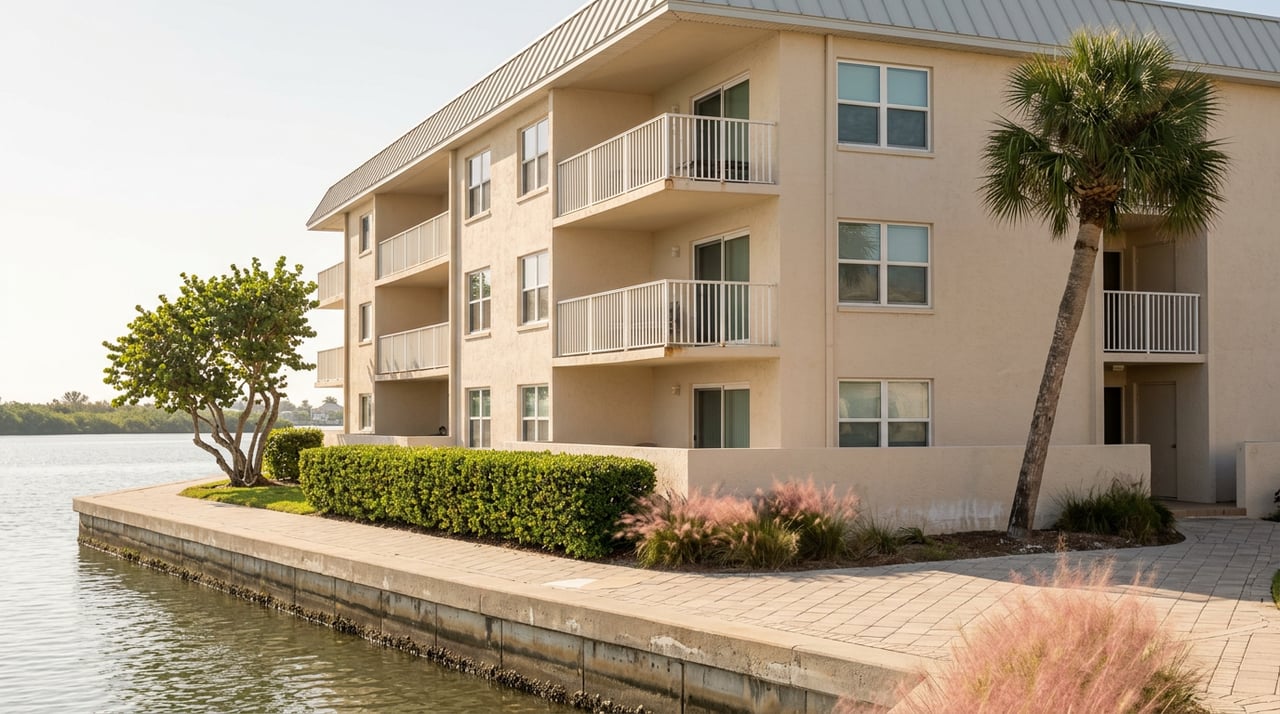
One recent listing at Camachee Island Condominium, a mid-rise building on the water near the Vilano Bridge, was marketed with a detail that would have meant nothing five years ago and now means everything: the building had completed all required milestone and structural integrity inspections, and any resulting assessments had already been paid off by the seller before the unit ever hit the market. That's not a footnote. In 2026, it's close to the single most valuable line in a St. Augustine condo listing.
Compare that to a building like Beach Homes at Villages of Vilano, finished in 1989, three stories, 61 units, sitting right on the Vilano Beach side of the bridge. Nothing about that building's age or height is unusual for this stretch of coast. But it puts the building squarely inside the window where Florida's post-Surfside inspection law applies, as Florida's condominium inspection guidance explains, and whether a specific building in that window has already done the work or hasn't started is exactly the kind of thing a listing price won't tell you on its own.
Why 2026 Is the Year This Stopped Being Theoretical
Florida's milestone inspection law has been on the books since 2022, but the parts that actually change a buyer's math are landing now. Condominium associations that existed before July 2022 had to complete their first Structural Integrity Reserve Study, the engineering-backed accounting of what a building's roof, load-bearing structure, plumbing, electrical, waterproofing, fire protection, and windows will cost to maintain, by the end of 2025, with those components outlined by True North Managed. Buildings coordinating that study with a milestone structural inspection due by the same date get a short runway to December 31, 2026, and that deadline is now a little over three months away.
The part that hits a buyer's wallet directly took effect at the start of this year. For any budget adopted after December 31, 2024, a condo board can no longer vote to waive or underfund reserves for the structural components a SIRS covers. Full funding became mandatory as of January 1, 2026. For decades, boards kept monthly dues low by voting every year to skip that funding. That option is gone for the eight components the law names, and the threshold for what counts as a "major" component subject to mandatory reserves was adjusted for inflation to just over $25,000 this year, according to FPAT.
What that means in practice: a building that spent thirty years deferring reserve contributions now has to catch up all at once, either through a special assessment, a loan the association repays through higher dues, or some combination of both. None of that shows up in a listing's price per square foot. It shows up eighteen months later in a mailbox.
St. Augustine Isn't One Condo Market
It helps to stop thinking of St. Augustine as a single market and start thinking of it as three, because the compliance picture looks different in each one. Master-planned communities of single-family homes along the US-1 and World Golf Village corridors mostly sidestep this entirely, since Florida's SIRS and milestone rules apply to condominium and cooperative buildings, not homeowners' associations governing detached houses. Small historic-district buildings downtown carry their own set of concerns tied to age and foundation type, separate from the concrete high-rise conversation. The barrier-island condo stock on Anastasia Island, Crescent Beach, and Vilano Beach is where this law does its heaviest lifting, because that's where the 1970s and 1980s mid-rise buildings sit, aging concrete and all, closest to salt air.
That distinction matters if you're cross-shopping. A condo unit in a barrier-island building and a similarly priced single-family home in a mainland HOA are not carrying the same category of risk, even if the sale prices land in the same range. One is subject to a state-mandated engineering report and reserve funding schedule. The other generally isn't.
What Insurance Is Already Telling You
Property managers who work these barrier-island buildings every day have a blunt way of putting it: insurance is no longer a line item, it's the budget. For oceanfront and near-oceanfront associations on Anastasia Island, Crescent Beach, and Vilano Beach, master policy premiums covering wind, named storm, flood, and general liability now routinely consume 20 to 30 percent of a building's entire operating budget. That single number does a lot of explaining. That leaves less room to absorb a surprise repair without going back to owners for more money, and puts real pressure on boards to keep reserve studies current rather than let a problem compound.
If you're comparing two units and one building's dues have crept up faster than the other's over the past two years, that gap is worth asking about directly. It's often not mismanagement. It's often just an honest insurance renewal.
Reading a Listing Like Someone Who's Done This Before
None of this means avoid condos on the barrier islands. It means read past the photos before you write an offer. For any building three stories or taller, ask for:
- The milestone inspection report and the date it was filed with the local building official, so you know whether the building has actually completed the process or is still working toward the deadline.
- The current Structural Integrity Reserve Study and the funding schedule it sets, so you can see whether the association is on pace or playing catch-up.
- Board meeting minutes from the last twelve months, which is usually where a pending assessment shows up in writing before it shows up as a bill.
- The insurance renewal notice and premium history, since a jump here often predicts a dues increase or assessment before either is officially voted on.
- Whether the building appears on any secondary-market lender restriction list, since that can affect your financing options even if the building itself is structurally sound.
A completed inspection with reserves properly funded and no pending assessments, the Camachee Island situation, is a genuine selling point worth paying attention to, not just a box to check. A building still working through Phase 1 or Phase 2 findings isn't automatically a problem either, but it's a different financial conversation, and you want to have it before closing rather than after.
What This Actually Changes If You're Comparing Two Units
Put two Vilano Beach or Anastasia Island units side by side at the same asking price, and the one with a completed inspection and funded reserves is very often the better value, even if its finishes are a notch behind. The unit with an unresolved SIRS or an inspection still pending isn't necessarily overpriced, but its true cost of ownership is an open question until that paperwork closes out. Price per square foot tells you what you're paying today. The building's compliance status tells you what you might be paying next year.
That's the piece a listing sheet was never built to show, and it's exactly the kind of detail worth walking through with someone who reads these documents regularly rather than sorting it out after you're under contract.
FAQ
Does this apply to single-family homes in St. Augustine? No. Florida's milestone inspection and SIRS requirements apply to condominium and cooperative buildings three stories or taller. Single-family homes, duplexes, and similar smaller structures fall outside this law entirely, even in barrier-island neighborhoods.
If a building already passed its milestone inspection, am I in the clear? A passed Phase 1 inspection is a good sign, but ask whether the SIRS funding schedule is current and whether any assessments tied to the inspection have already been paid, as with Camachee Island, or are still being collected.
Is Vilano Beach different from Anastasia Island in how this plays out? Both sit in the same barrier-island category facing the same state law, but individual buildings vary by age, height, and how proactively their boards have funded reserves. The law is the same. Each building's paperwork is not.
If you're weighing a condo purchase on Vilano Beach, Anastasia Island, or Crescent Beach and want a second set of eyes on a building's inspection paperwork before you write an offer, Ramona Damian has spent years reading exactly this kind of documentation for clients relocating to and investing in the St. Augustine area. Let's connect before you fall for the view.
This article is general information, not legal, tax or financial advice. Consult a qualified professional about your situation.